
Welcome back to Marie Speaks G-d’s Grace Bible Study
Shalom Children of G-d!
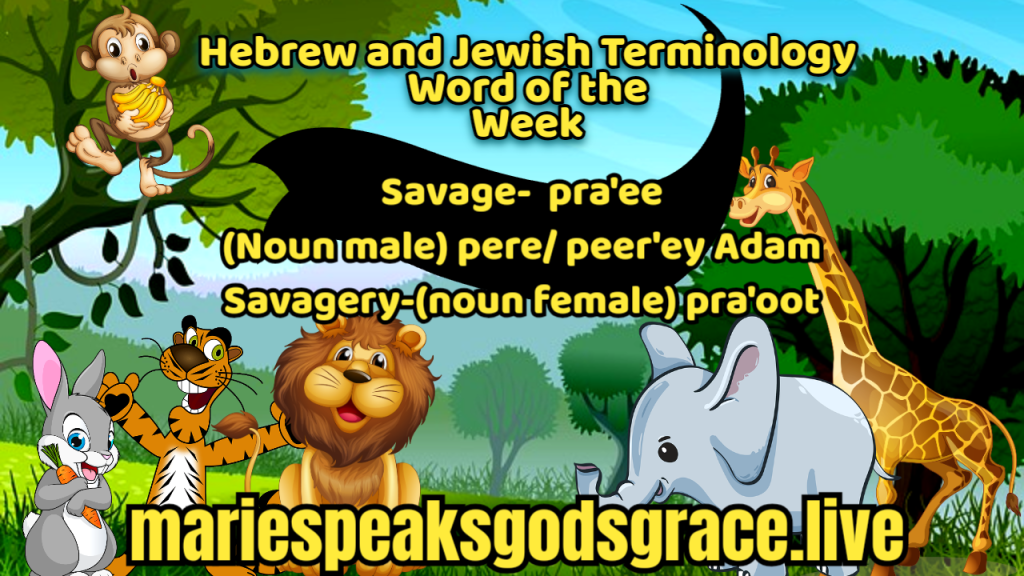
This week’s Jewish terminology words are:
Welcome and thank you all for returning!
Thank you to all who are new members and subscribers!
And thank you to those who will join and subscribe throughout the season! Most of all and most importantly:
#thankyouHaShem
My G-d and the True Love of My Life!

This portion of the season is scheduled to run through
April 12, 2024 and
conclude May 24, 2024, but don’t be sad……

For those who would like to receive our free Blog’s and updates please enter email and click subscribe.
And you can scroll through our pages to view and read some of this websites other posts, as well as view all this and previous season of teaching or lesson on our youtube and rumble channels.
- Contact
- How we conduct Bible Studies here…..
- Jewish And American History
- Marie Speaks G-D’s Grace Official Social Media Links
- Meditations of my Heart
- Meet Marie the Nazarite
- Quiz Time: Torah and Tanakh Trivia
- Season 5 Bible Study Blog
- Season 6 Are you going to be part of the problem or part of the solution?
- What Marie likes…
- What Marie Likes……. Books
Let’s continue on..
What to expect this Bible Study Lesson?
We will continue to increase in our intro Hebrew vocabulary, with an intro to Hebrew terminology, coupled with a version of The Tanakh (the actual …. Jewish Bible.. that means no “new testament”) introduction, and will always rooted in Torah Spiritual Teaching.
The books, sources, and resources or references I will do my best to make sure are hyperlinked for others to review and study at their own leisure and for gaining in self-learning/teaching. The books, sources, and resources or references that we share here at mariespeaksgodsgrace.live, are not commonly found or promoted by the internet, therefore we do our best to provide the Torah filled information for others not to be led towards secular or pagan or idolatry propaganda lifestyles.
My goal is to help and assist others by studying Torah , researching Torah sages information and teachings, applying in life the lessons taught by our sages of Blessed memory and today, then learning and sharing/teaching what I have learned or experienced. This rounds out my personal experiences in any moment or season of life, thus forming a reality.
This reality is a living, yes living, energy frequency.
Physical And Spiritual
Able to raise higher and higher (G-d willing) and be adjusted as more experiences and new learning take place. These are my attempts at improving myself and hoping to leave the part of the world I have been placed, in better state than before (if needed) and the people I encounter (if possible). People and or places, I am so very blessed to encounter, G-d willing, will have a positive (frequency strong hold/ pillar of success for G-d’s Glory) experience of their own that will ultimately lead them to… you guessed it… G-d and His Holy Torah.
This Is Not Forced Or Coerced, Nor Manipulated.
With full acceptance of my own and others free will, (given to us by the Holy Creator), therefore at the end of the day one’s own education is determined by their efforts, intentions, and perseverance of truth.
Everyone has a responsibility to their own life, experiences, learning, and education (to name a few), in seeking and finding truth forming their reality.
TRUTH
I believe all truth comes from G-d and was given to us in His Holy Torah, and then lived out in the Tanakh. To be clear I believe all Truth comes from the G-d of Abraham, Issac, and Jacob and was given to us through His Prophet Moses to teach to the world and all those who love Him, know, Him and call Him by name and live by His Torah.
In order to understand, realize, and learn the truth, we should attempt, to the highest degree possible, to learn terminology, and then share this beauty with others who are open.
So What Is Terminology?
Terminology, as defined by Wikipedia, is:
Terminology is a group of specialized words and respective meanings in a particular field, and also the study of such terms and their use; the latter meaning is also known as terminology science.A term is a word, compound word, or multi-word expressions that in specific contexts is given specific meanings—these may deviate from the meanings the same words have in other contexts and in everyday language.
Terminology is a discipline that studies, among other things, the development of such terms and their interrelationships within a specialized domain.
Terminology differs from lexicography, as it involves the study of concepts, conceptual systems and their labels (terms), whereas lexicography studies words and their meanings.
Terminology is a discipline that systematically studies the “labelling or designating of concepts” particular to one or more subject fields or domains of human activity. It does this through the research and analysis of terms in context for the purpose of documenting and promoting consistent usage.
Terminology can be limited to one or more languages (for example, “multilingual terminology” and “bilingual terminology”), or may have an interdisciplinarity focus on the use of terms in different fields.
Let’s get into…..
video link: https://rumble.com/v4u4mzq-hebrew-and-jewish-terminology-savage-praee-pere-peerey-adam-and-savagery-pr.html
This week’s Hebrew and Jewish terminology words are:
Savage– pra’ee (noun male) pere/ peer’ey adam
- To make wild, barbarous, or cruel.
- To act the savage; indulge in cruel or barbarous deeds.
- Of or pertaining to the forest or wilderness.
- Possessing, characterized by, or presenting the wildness of the forest or wilderness.
- Living in the forests or wilds.
- Not domesticated; feral; wild; hence, fierce; ferocious; untamed: as, savage beasts of prey.
- Brutal; beastly.
- Living in the lowest condition of development; uncultivated and wild; uncivilized: as, savage tribes.
- Of, pertaining to, or characteristic of man in such a condition; unpolished; rude: as, savage life or manners.
- Barbarous; fierce; cruel.
Savagery (noun female) pra’oot
noun
- The quality or condition of being savage.
- An act of violent cruelty.
- Savage behavior or nature; barbarity.
An other word for savage is cruelty: In the article from Jewishencylopedia.com
CRUELTY:
By: Kaufmann Kohler, Emil G. Hirsch
The disposition to inflict pain and to gloat over suffering. Widely prevalent among, if not characteristic of, savages and barbarians, it has influenced their treatment of strangers, enemies, and evildoers. Primitive races, however, are strongly inured to pain, being early in life trained to endure it unflinchingly, as the various initiatory rites at puberty in universal vogue among them show (see Heinrich Schurtz, “Altersklassen und Männerbunde,” pp. 92 et seq., Berlin, 1902). Moreover, lack of imagination incapacitates them for measuring the suffering entailed on others (Tylor, “Anthropology,” p. 408, New York, 1897). Again, among them, as also among civilized nations of antiquity, religious notions sanctify the passion for revenge, nearly always an elements of cruelty. Abel’s “blood cries to heaven” (Gen. iv. 10, Hebr.). The deity itself is injured and offended, and the land is defiled by bloodshed. ……. Cruel practises connected with the observances of religion, such as mutilations, the cutting of gashes (see Cuttings), the burning of children to propitiate Moloch, and human sacrifice generally, rest originally upon a similar idea…..
An example from the Tanakh of a greatly savage and cruel leader was Nebuchadnezzar.
His Relationship With G‑d
Although Nebuchadnezzar bowed to the sun17 and other idols,18 he did not deny the existence of G‑d. As he said to Daniel, “Truly, your G‑d is the G‑d of the gods and the Master of the kings.” But he made the classic error of thinking that G‑d had abdicated His direct involvement with the universe and delegated it to other deities.19 Nevertheless, while serving as chief scribe of the Babylonian ruler Merodach-Baladan, Nebuchadnezzar took great care to record the acknowledgment of G‑d at the opening of the missives he penned.20
His Immorality
The effects of circumscribing the One G‑d to a plane divorced from the physical reality were readily evident in his morally corrupt and contemptible behavior. His sadistic tendencies drove him to bring about the slow, torturous death of Hiram, king of Tyre,21 but not before raping his queen (who was his own mother22) before his eyes.23 The Talmud reveals that he would cast lots each day to determine which of his imprisoned kings he would sodomize.24
In contradiction, I was able to find another article of alleged savages commonly called Indians. An article I found to be interesting and possibly related was
MONTEZINOS, ANTONIO DE (AARON LEVI): By: Gotthard Deutsch, Joseph Jacobs
Marano traveler of the seventeenth century. He claimed that while journeying in South America about 1641 near Quito, Ecuador, he met with savages who practised Jewish ceremonies and recited the Shema’ and who were of the tribe of Reuben. He met other savages of the tribe of Levi. Going to Holland in 1644 he told this story to Manasseh ben Israel; the latter repeated it to Thomas Thorowgood, by whom it was printed in his “Jews in America,” pp. 1-9 et seq. It was also published by Manasseh ben Israel in his “Hope of Israel,” pp. 1-7.
After being greatly interested in this article I decided to look a little deeper in to this writing… and guess what I found!!!!?????


I know the text is very small, but I have hyperlinked the screen shots for others. Basically the writing confirmed the article that I found. The ebook :
Title: Menasseh ben Israel's Mission to Oliver Cromwell
Being a reprint of the Pamphlets published by MENASSEH BEN ISRAEL to promote the Re-admission of the Jews to England 1649-1656

How awesome is that!!!!!!
I love love love researching!!!!!!
I used 3 books to aide me in my research this lesson are from my personal home library:
I truly enjoyed studying and researching this week’s Jewish Terminology Word.
What lead me to research specifically this word?
I am glad you asked…. I honestly don’t really have a good answer here … this time. I honestly, was just cleaning and thinking about something I saw on the news that really troubled me. So of course I began to pray to G-d my wonderful glorious Father. Some words out loud, but mostly in my heart I was puttering around praying. I was asking G-d, how can some people be so evil, so cruel, so and the word savage popped up in my mind. And I said yes exactly soooo savage. I don’t understand. Where or how, does being a savage or evil or wicked or cruel come to someone or a group of people or a society as a way of life? I believe most people are good and want to good and want to be good, all good according to Torah of course.
I actually had decided a couple of days ago not to continue watching so much news. I mean I was watching news day and night and on walks etc. and I just was feeling so very over whelmed. I decided I didn’t want that feeling of being overwhelmed therefore the great difference in stress of watching the news and being informed had to be railed in. So this is what lead to me… just focusing more and more on lessons in Torah study and walks in nature and great times with wonderful family and friends.
But, why are some people soooo savage? This question still linger…. so I decided to look it up and make a lesson out of it.
Moving along with the study….
Soooooo I asked myself…….
–Are false or are sometimes people or groups labeled as savages, pra’ee (noun male) pere/ peer’ey adam , but in reality pious people? Yes, I have found many conquering nations would vilify societies in order to create a cause for the unknowing to fight against. For example, several of causes that have been falsely used for forces to use savage force against are 911, Haiti, Kenya, OIF, OEF, killing off of natives of any land or wanted territory and so many more.
–Are many of the truly savage pra’ee (noun male) pere/ peer’ey adam, cultures or societies still in existence today? Yes, sadly…. we will get into this below.
–Is there a way to conquer that savagery (noun female) pra’oot, animal instinct? Thank G-d truly and whole heartedly yes!
I want to get into this answer first…..
How to conquer evil in judaism
In Judaism, the concept of evil is complex and multifaceted. According to Jewish tradition, humans have both good and evil inclinations within themselves, and the ability to do evil is a facet of free will. Here are some ways to approach and conquer evil in Judaism:
Understanding the concept of Yetzer Hara: The Yetzer Hara, or the inclination to do evil, is a natural part of human nature. Recognizing this inclination is the first step in conquering evil. Jews believe that people are born with the ability to recognize good from evil, and that this recognition is a key part of the struggle against evil.
Developing good habits and character traits: Judaism emphasizes the importance of developing good habits and character traits, such as kindness, compassion, and honesty. By cultivating these traits, individuals can strengthen their inner goodness and resist the temptation of evil.
Practicing mitzvot: Mitzvot, or commandments, are a central part of Jewish practice. By performing mitzvot, individuals can connect with God and cultivate a sense of morality and ethics. Many mitzvot, such as helping the poor and honoring one’s parents, can help individuals develop a sense of empathy and compassion, which can counteract the influence of evil.
Seeking guidance and wisdom: Judaism places a strong emphasis on seeking guidance and wisdom from religious leaders, such as rabbis and scholars. By seeking guidance and wisdom, individuals can gain a deeper understanding of the nature of evil and how to overcome it.
Focusing on the good: Judaism teaches that the pursuit of good is a powerful antidote to evil. By focusing on the good and cultivating a sense of gratitude and appreciation for the blessings in one’s life, individuals can counteract the influence of evil and bring more light and positivity into the world.
Recognizing the role of free will: Judaism teaches that humans have free will, and that this free will is a key part of the struggle against evil. By recognizing the role of free will, individuals can take responsibility for their actions and choices, and make conscious decisions to choose good over evil.
Seeking forgiveness and redemption: Judaism places a strong emphasis on seeking forgiveness and redemption. By seeking forgiveness and making amends for past mistakes, individuals can break free from the cycle of evil and start anew.
By following these principles, individuals can work to conquer evil in Judaism and cultivate a deeper sense of morality, ethics, and compassion.
Now for the next question:
–Are many of the truly savage cultures or societies still in existence today?
This may get pretty dark or difficult to read so I encourage everyone to prepare themselves.

A couple of actual Savage societies:
Witchcraft accusations against children in Africa
South Africa. The continued murder within Black communities of children of all ages, for body parts with which to make muti, for purposes of witchcraft, still occurs in South Africa. Muti murders occur throughout South Africa, especially in rural areas. Traditional healers or witch doctors often grind up body parts and combine them with roots, herbs, seawater, animal parts, and other ingredients to prepare potions and spells for their clients.[65]Uganda.
Child sacrifice in Uganda In the early 21st century Uganda has experienced a revival of child sacrifice. In spite of government attempts to downplay the issue, an investigation by the BBC into human sacrifice in Uganda found that ritual killings of children are more common than Ugandan authorities admit.[66] There are many indicators that politicians and politically connected wealthy businessmen are involved in sacrificing children in practice of traditional religion, which has become a commercial enterprise.[67]
Pre-Islamic Arabia
The Quran describes pagan Arabians sacrificing their children to idols.[Quran 6:137][non-primary source needed]
Europe
Archaeologist Peter Warren was involved in the British School at Athens excavation of Palekastro for one season and the excavation at Lefkandi for two seasons. Then he led the excavation at Fournou Korifi, Myrtos from 1967 to 1968. During the 1980s, in two archaeology magazines, Warren wrote about “child sacrifice” despite there being no mention of this subject in the official excavation report, which was completed and published along with his book in 1972.[58][59][60]
Startling as it may seem, the available evidence so far points to an argument that the children were slaughtered and their flesh cooked and possibly eaten in a sacrifice ritual made in the service of a nature deity to assure an annual renewal of fertility.[61][62]
Rodney Castleden uncovered a sanctuary near Knossos where the remains of a 17-year-old were found.
His ankles had evidently been tied and his legs folded up to make him fit on the table… He had been ritually murdered with the long bronze dagger engraved with a boar’s head that lay beside him.[63]
The Ver Sacrum is a religious practice of ancient Italic peoples, especially the Sabelli (or Sabini) and their offshoot Samnites. The practice is related to that of devotio in Roman religion. It was customary to resort to it at times of particular danger or strife for the community. Some scholars believe that in earlier times devoted or vowed children were actually sacrificed, but later expulsion was substituted. Dionysius of Halicarnassus states the practice of child sacrifice was one of the causes that brought about the fall of the Pelasgians in Italy.
The human children who had been devoted were required to leave the community in early adulthood, at 20 or 21 years of age. They were entrusted to a god for protection, and led to the border with a veiled face. Often they were led by an animal under the auspices of the god. As a group, the youth were called sacrani and were supposed to enjoy the protection of Mars until they had reached their destination, expelled the inhabitants or forced them into submission, and founded their own settlement. The Waldensians, a medieval sect deemed heretical, were accused of participating in child sacrifice.
Phoenicia and Carthage

See also: Punic religion and Tophet
The practice of child sacrifice among Canaanite groups is attested by numerous sources spanning over a millennium. One example is in the writings of Diodorus Siculus:
“They also alleged that Kronos had turned against them inasmuch as in former times they had been accustomed to sacrifice to this god the noblest of their sons, but more recently, secretly buying and nurturing children, they had sent these to the sacrifice; and when an investigation was made, some of those who had been sacrificed were discovered to have been substituted by stealth… In their zeal to make amends for the omission, they selected two hundred of the noblest children and sacrificed them publicly; and others who were under suspicion sacrificed themselves voluntarily, in number not less than three hundred. There was in the city a bronze image of Kronos, extending its hands, palms up and sloping towards the ground, so that each of the children when placed thereon rolled down and fell into a sort of gaping pit filled with fire. It is probable that it was from this that Euripides has drawn the mythical story found in his works about the sacrifice in Tauris, in which he presents Iphigeneia being asked by Orestes: “But what tomb shall receive me when I die? A sacred fire within, and earth’s broad rift.” Also the story passed down among the Greeks from ancient myth that Cronus did away with his own children appears to have been kept in mind among the Carthaginians through this observance.” Library 20.14
“Again, would it not have been far better for the Carthaginians to have taken Critias or Diagoras to draw up their law-code at the very beginning, and so not to believe in any divine power or god, rather than to offer such sacrifices as they used to offer to Cronos? These were not in the manner that Empedocles describes in his attack on those who sacrifice living creatures: “Changed in form is the son beloved of his father so pious,Who on the altar lays him and slays him. What folly!” No, but with full knowledge and understanding they themselves offered up their own children, and those who had no children would buy little ones from poor people and cut their throats as if they were so many lambs or young birds; meanwhile the mother stood by without a tear or moan; but should she utter a single moan or let fall a single tear, she had to forfeit the money, and her child was sacrificed nevertheless; and the whole area before the statue was filled with a loud noise of flutes and drums so that the cries of wailing should not reach the ears of the people.” Moralia 2, De Superstitione 3
“With us, for instance, human sacrifice is not legal, but unholy, whereas the Carthaginians perform it as a thing they account holy and legal, and that too when some of them sacrifice even their own sons to Cronos, as I daresay you yourself have heard.” (Minos 315)
“And from then on to the present day they perform human sacrifices with the participation of all, not only in Arcadia during the Lykaia and in Carthage to Kronos, but also periodically, in remembrance of the customary usage, they spill the blood of their own kin on the altars, even though the divine law among them bars from the rites, by means of perirrhanteria and the herald’s proclamation, anyone responsible for the shedding of blood in peacetime.”[48]
“. . . was chosen as a . . . sacrifice for the city. For from ancient times the barbarians have had a custom of sacrificing human beings to Kronos.”
“Some even proposed renewing a sacrifice which had been discontinued for many years, and which I for my part should believe to be by no means pleasing to the gods, of offering a freeborn boy to Saturn —this sacrilege rather than sacrifice, handed down from their founders, the Carthaginians are said to have performed until the destruction of their city—and unless the elders, in accordance with whose counsel everything was done, had opposed it, the awful superstition would have prevailed over mercy. But necessity, more inventive than any art, introduced not only the usual means of defence, but also some novel ones.” History of Alexander IV.III.23
“In Africa infants used to be sacrificed to Saturn, and quite openly, down to the proconsulate of Tiberius, who took the priests themselves and on the very trees of their temple, under whose shadow their crimes had been committed, hung them alive like votive offerings on crosses; and the soldiers of my own country are witnesses to it, who served that proconsul in that very task. Yes, and to this day that holy crime persists in secret.” Apology 9.2-3

“Among ancient peoples in critically dangerous situations it was customary for the rulers of a city or nation, rather than lose everyone, to provide the dearest of their children as a propitiatory sacrifice to the avenging deities. The children thus given up were slaughtered according to a secret ritual. Now Kronos, whom the Phoenicians call El, who was in their land and who was later divinized after his death as the star of Kronos, had an only son by a local bride named Anobret, and therefore they called him Ieoud. Even now among the Phoenicians the only son is given this name. When war’s gravest dangers gripped the land, Kronos dressed his son in royal attire, prepared an altar and sacrificed him.”[49]
“There is another form of sacrifice here. After putting a garland on the sacrificial animals they hurl them down alive from the gateway and the animals die from the fall. Some even throw their children off the place, but not in the same manner as the animals. Instead, having laid them in a pallet, they drop them down by hand. At the same time they mock them and say that they are oxen, not children.”[50]
“And Kleitarchos says the Phoenicians, and above all the Carthaginians, venerating Kronos, whenever they were eager for a great thing to succeed, made a vow by one of their children. If they would receive the desired things, they would sacrifice it to the god. A bronze Kronos, having been erected by them, stretched out upturned hands over a bronze oven to burn the child. The flame of the burning child reached its body until, the limbs having shriveled up and the smiling mouth appearing to be almost laughing, it would slip into the oven. Therefore the grin is called “sardonic laughter,” since they die laughing.”[51]
“The Phoenicians too, in great disasters whether of wars or droughts, or plagues, used to sacrifice one of their dearest, dedicating him to Kronos. And the ‘Phoenician History,’ which Sanchuniathon wrote in Phoenician and which Philo of Byblos translated into Greek in eight books, is full of such sacrifices.”[52]
In conclusion my dear friends and family, What I got from my experience coupled with this week Hebrew and Jewish Terminology Word of the week …..
Savage– pra’ee (noun male) pere/ peer’ey adam
- To make wild, barbarous, or cruel.
- To act the savage; indulge in cruel or barbarous deeds.
- Of or pertaining to the forest or wilderness.
- Possessing, characterized by, or presenting the wildness of the forest or wilderness.
- Living in the forests or wilds.
- Not domesticated; feral; wild; hence, fierce; ferocious; untamed: as, savage beasts of prey.
- Brutal; beastly.
- Living in the lowest condition of development; uncultivated and wild; uncivilized: as, savage tribes.
- Of, pertaining to, or characteristic of man in such a condition; unpolished; rude: as, savage life or manners.
- Barbarous; fierce; cruel.
Savagery (noun female) pra’oot
noun
- The quality or condition of being savage.
- An act of violent cruelty.
- Savage behavior or nature; barbarity.
Going back to How to conquer evil in judaism under Recognizing the role of free will: Judaism teaches that humans have free will, and that this free will is a key part of the struggle against evil. By recognizing the role of free will, individuals can take responsibility for their actions and choices, and make conscious decisions to choose good over evil.
In my humble opinion and experience, no matter what negative influences are attempting to coax us into acting, or thinking, or living, or whatever the case may be, into savage behavior or savage living, we have free will.
Yes, free will.
Throughout the ages, there have been pious people who have chosen, though it was very difficult, to stay loyal to G-d and His Torah and His covenant. In general, stay true to G-d despite negative influences can be quite trying or even seem we have a choice. How we react or endure or G’W, conquer any task or weight or difficulty is all up to us. Many of us might have come across negative events or people or situations, and at the time we might have no idea or toll in the box how to handle this or that. We have to find away to trust in HaShem the Blessed Holy One, and know that what ever and I mean what ever has come about has come and will go far far away never to return G’W again by G-d’s will for our benefit or even judgement or justice.
Even As a Sharp Sword Lies Upon Your Neck
Here’s a story, told in the Talmud,1 to recall whenever ominous clouds stand overhead:
When King Chizkiah (Ezekiah) fell ill, Isaiah the prophet came to visit him. But rather than console him, he announced a heavenly decree: He was to die in this world and he would not receive a share in the World to Come.
“Isaiah,” countered the king. “Cease your prophecy and leave! So have I received from my ancestor David: Even as a sharp sword rests upon your neck, do not refrain from pleading for divine mercy.”
Then he turned to the wall and began to pray from the innermost of his heart—and he lived another 15 glorious years.
True prayer requires faith. And a faithful prayer must conclude with confidence and trust that the One to whom the prayer was addressed will answer in the very best way. Even when the decree is signed and sealed and the cold blade of a sharp sword lies over your neck, time can be turned back and the entire universe can be reordered through the power of one sincere prayer.
Omayn and Omayn
#ThankYouHaShem

Wasn’t that so much fun!
#thankyouHaShem !
I love learning and growing in our faith and terminology!
Thank you all for being here… and thank you everyone who does research and shares knowledge!
To Recap:
This weeks word was selected as the Jewish terminology word of the week :
I used 3 books to aide me in my research this lesson:
I’m not paid to endorse nor affiliated. These books are from my personal library. I purchased these book from Thriftbooks.com or Amazon, or just random but not random wonderful finds, you can get your own personal low price copy using the link below.
Remember to keep up to date with us via our website at
MarieSpeaksGOD’sGrace.live , for all our blog and social media links.
Season 6 of the Bible Study has returned! wooooh! woooh!
Please fell free to catch up on the Bibles Studies and other videos We have uploaded on YouTube
and Rumble.
So like, heart, rumble, subscribe and or share for next class.
Until next time, with G-d’s zeesen beautiful Love, Mercy, and Grace we will see each other soon.
with love,
Marie.
Disclaimer: Sources and resources have been hyperlinked in BLOG for easier reading during the podcast and to give credit to the originator or source of references, or anything else. #sharingiscaring
Fair use:
Under the fair use doctrine of the U.S. copyright statute, it is permissible to use limited portions of a work including quotes, for purposes such as commentary, criticism, news reporting, and scholarly reports. There are no legal rules permitting the use of a specific number of words, a certain number of musical notes, or percentage of a work.


Discover more from Rheena Velia Speaks G-D's Grace
Subscribe to get the latest posts sent to your email.

I do not even know how I ended up here but I thought this post was great I dont know who you are but definitely youre going to a famous blogger if you arent already Cheers
LikeLike
Simply desire to say your article is as surprising The clearness in your post is simply excellent and i could assume you are an expert on this subject Fine with your permission let me to grab your feed to keep up to date with forthcoming post Thanks a million and please carry on the gratifying work
LikeLike
Wow superb blog layout How long have you been blogging for you make blogging look easy The overall look of your site is magnificent as well as the content
LikeLike